
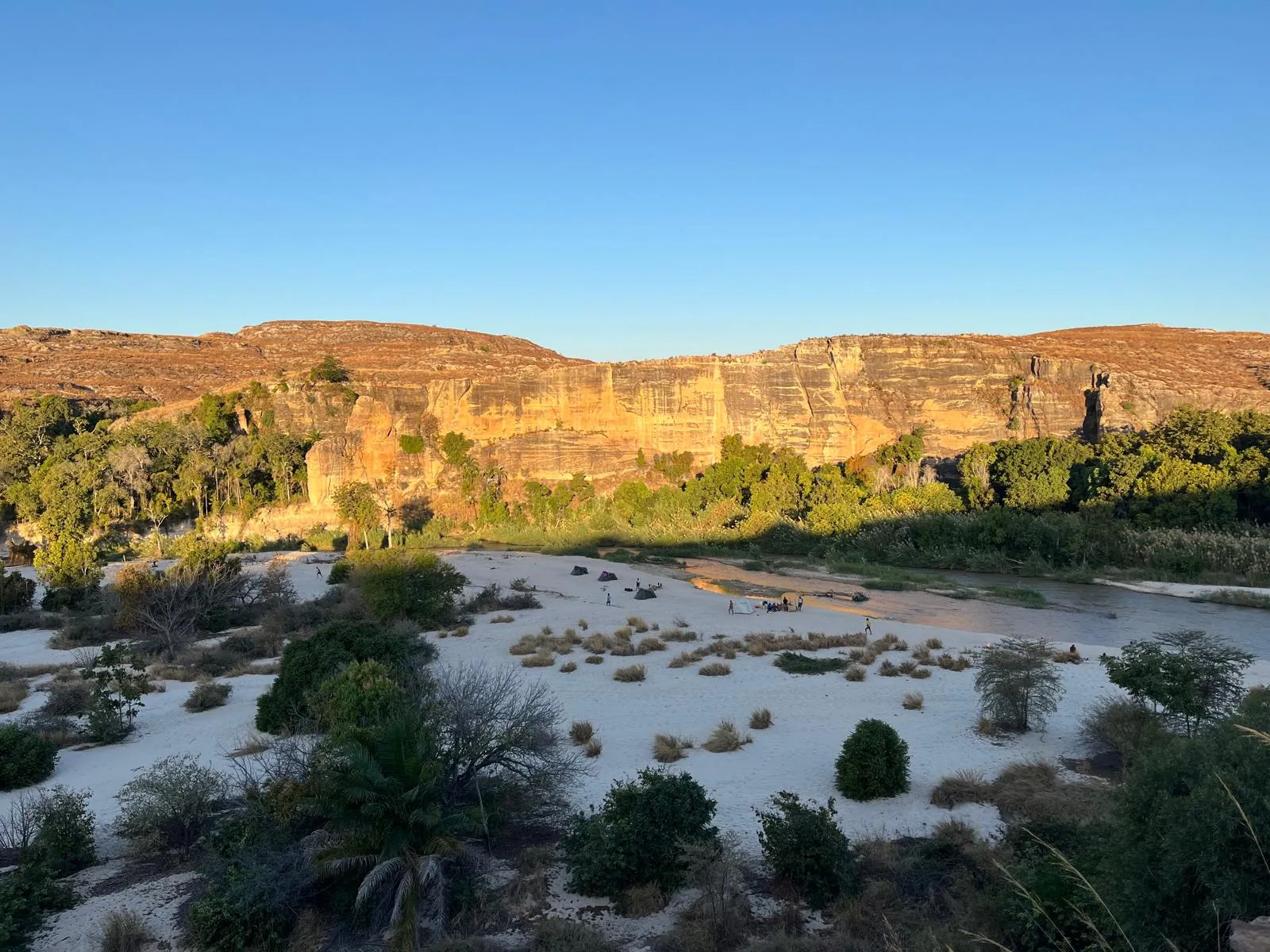
Trek Makay — Expedition into the Makay Massif
The Makay Massif is one of Madagascar's most breathtaking treasures, deep in the south-west of the island — a maze of Jurassic sandstone where erosion has carved deep galleries and spectacular amphitheatres. A genuine off-the-beaten-track expedition with porters, riders, a cook and a guide.
Best time to go
- Jan
- Feb
- Mar
- Apr
- May
- Jun
- Jul
- Aug
- Sep
- Oct
- Nov
- Dec
The Makay is only accessible in the dry season, from May to September.
What you'll experience
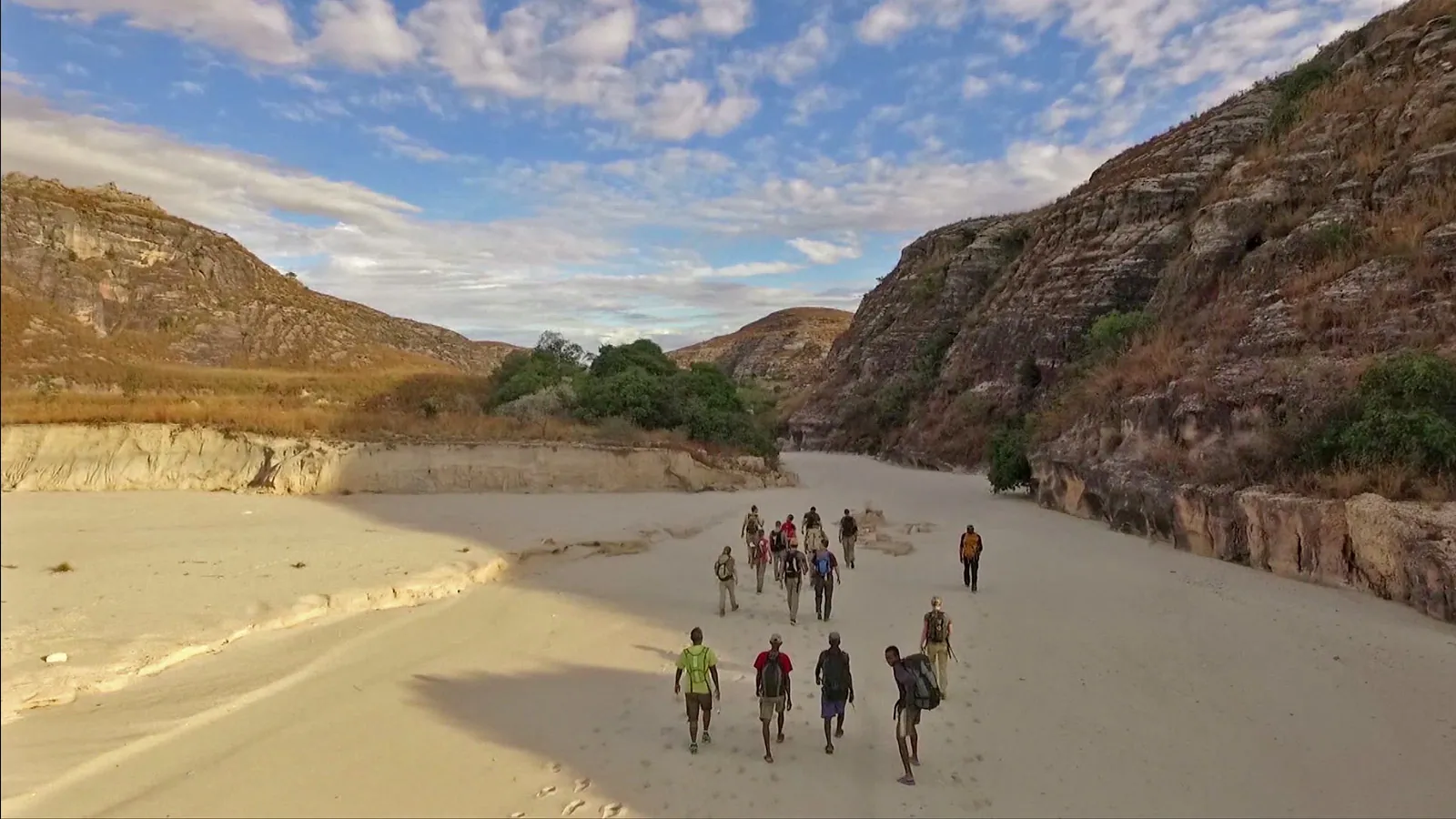
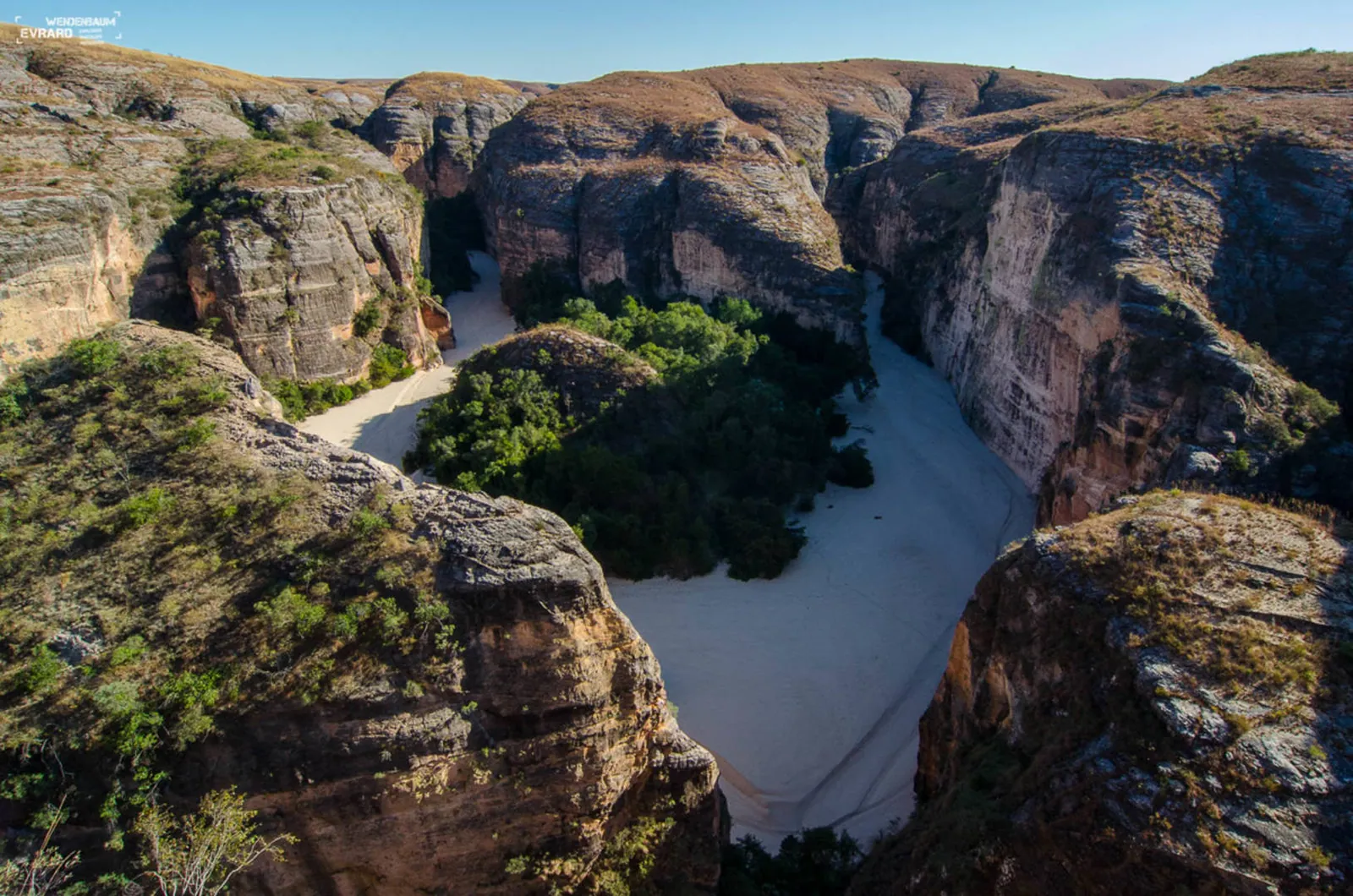
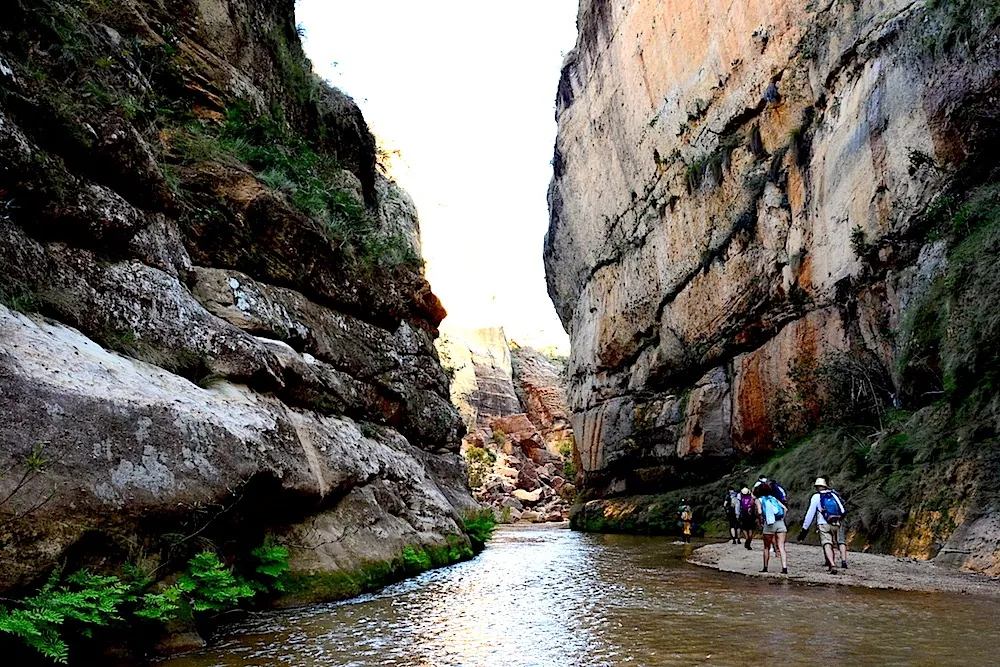
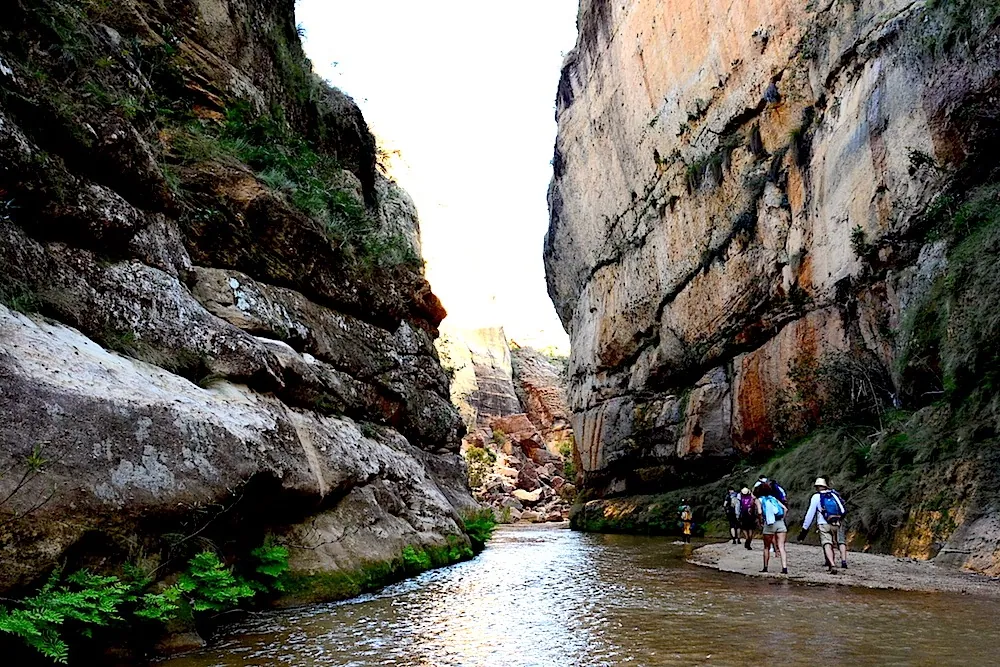
- Ruiniform sandstone canyons and natural amphitheatres
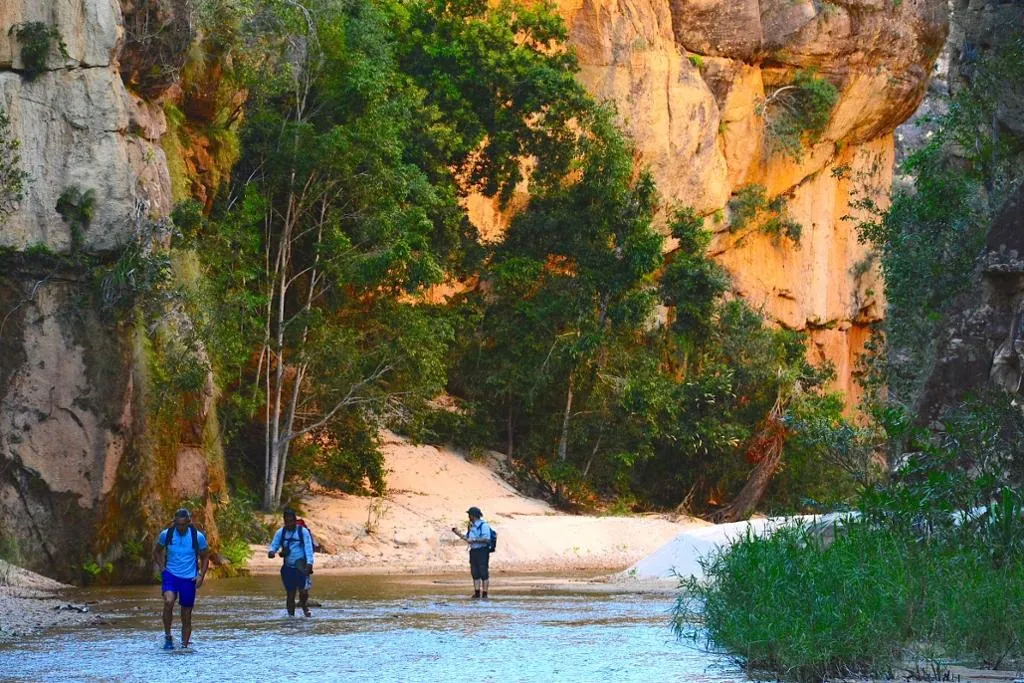
- Bivouacs on white sand beside crystal-clear rivers
- Nine species of lemur recorded in the massif
- Cave paintings dating back to the 8th century
- Kirindy Reserve and the Avenue of the Baobabs
- Waterfalls feeding natural swimming pools
About the Makay Massif
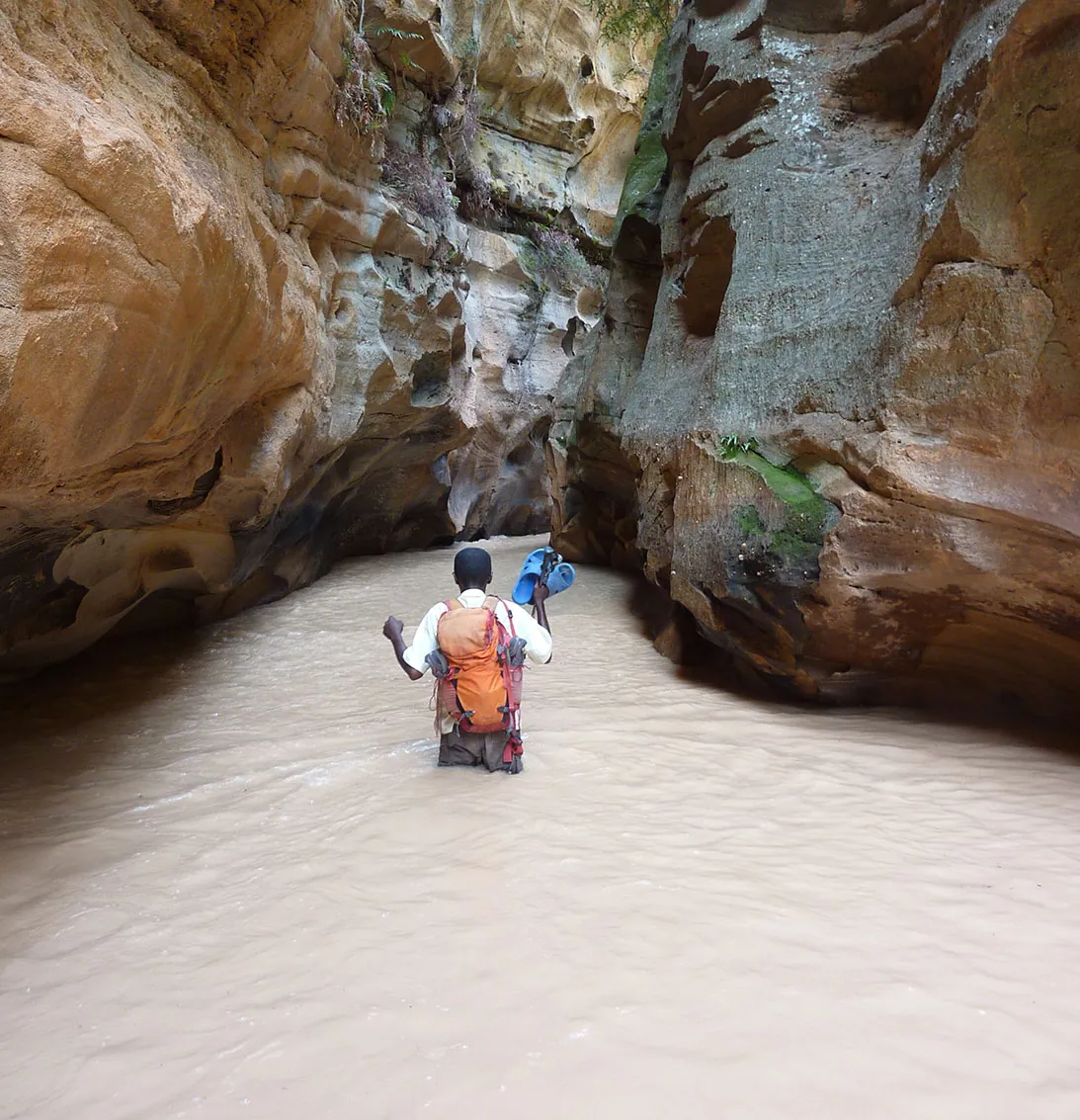
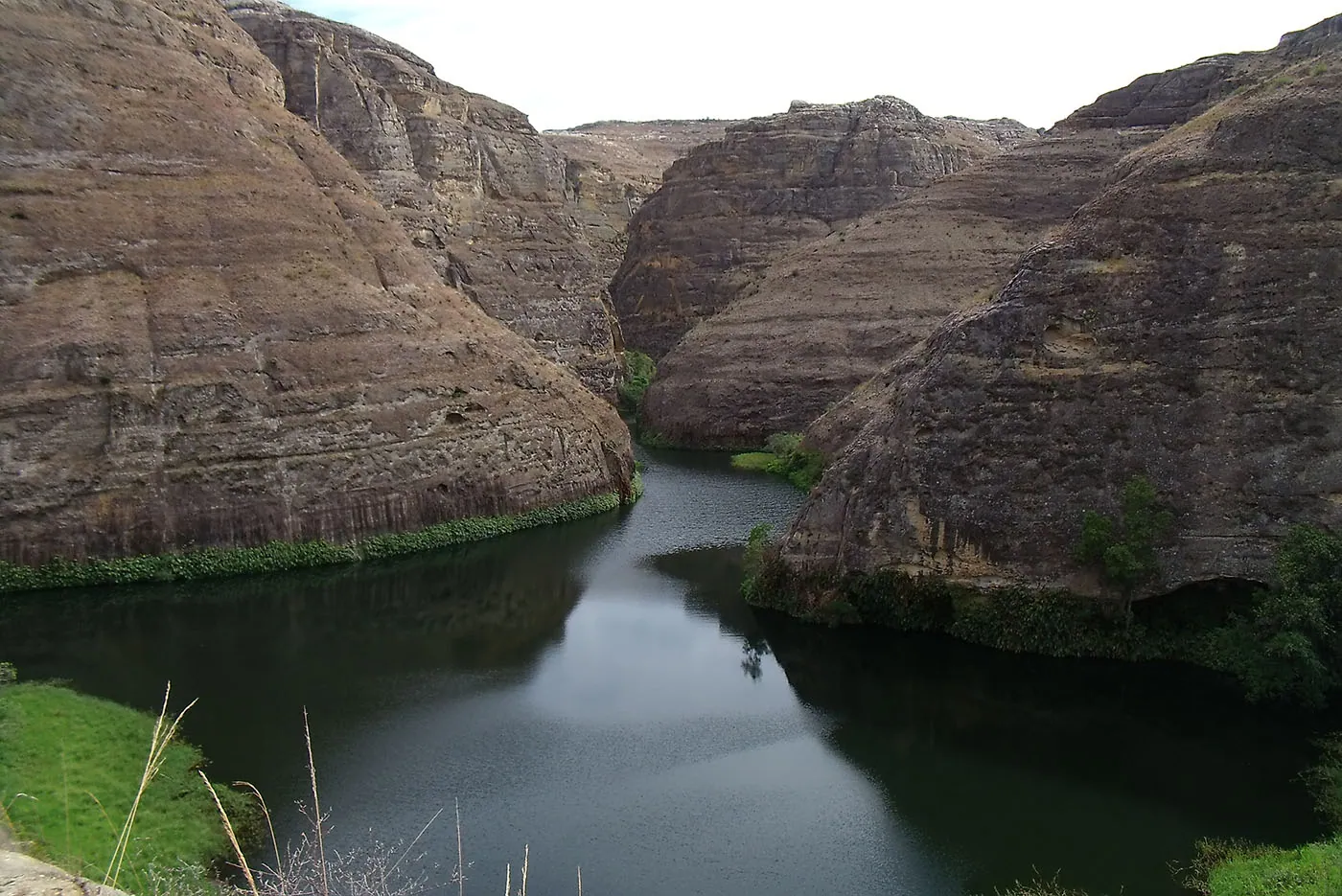
The Makay Massif is located deep in the south-west of Madagascar. It is a maze of Jurassic sandstone, commonly called ruiniform: rock blocks separated by corridors, where erosion has dug deep galleries and spectacular amphitheatres throughout the enormous rock mass.
Hiking in the Makay is a journey into wilderness where time seems to stop. Vast, wild and almost mythical, it is a sculpted landscape of canyons and sandstone mountains covering thousands of square kilometres. Seen from above, the massif appears as a huge mosaic of valleys.
Biodiversity of the Makay
The Makay has remarkable biodiversity, with a wide range of endemic species. Lemurs identified there include the red-fronted lemur (Eulemur rufifrons), Coquerel's giant mouse lemur (Mirza coquereli), grey mouse lemur (Microcebus murinus), fat-tailed dwarf lemur (Cheirogaleus medius), pale fork-marked lemur (Phaner pallescens), red-tailed sportive lemur (Lepilemur ruficaudatus), reddish-grey mouse lemur (Microcebus griseorufus), Verreaux's sifaka (Propithecus verreauxi) and the Ranomafana bamboo lemur (Hapalemur griseus ranomafanensis).
Beyond lemurs, the fauna is vibrant: bats, fish, amphibians, reptiles, over 2,000 insects and myriapods and many bird species. The flora includes pteridophytes, bryophytes and seven xerophyte species, two of them endemic to the Makay. A real paradise for scientists.
History of the Makay
The Makay has been inhabited for a very long time, as the cave paintings found there attest — the oldest dating back to the 8th century. The Sakalava were the first permanent inhabitants, settling here for shelter from the Merina of the highlands. The nomadic Bara herders came later.
Most people living in the Makay region today are Bara, semi-nomadic pastoralists whose territory lies between the Mangoky River, the Midongy forest and the villages of Beroroha and Sakaraha. They are known for raising zebu, a symbol of wealth, and for traditional music and dances such as the Papango, which imitates the suspended flight of a bird.
Preparing for the expedition
Comfortable walking shoes, mosquito and insect repellent, high-SPF sunscreen and after-sun lotion, long-sleeved shirts and light trousers, a light sweater or jacket for cool evenings, a hat or cap, personal medication for the whole trip, a basic first-aid kit and wet wipes.
Photos from this tour
Your detailed programme
- 1Road transferFlightOvernight
- 2Road transferOvernight
- 3HikeOvernight
- 4Overnight
- 5Overnight
- 6Road transferHikeOvernight
- 7Road transferOvernight
- 8Road transferHikeOvernight
- 9Road transferOvernight
- 10HikeOvernight
- 11Boat / pirogueOvernight
- 12Road transferFlightOvernight
- 13Overnight
- 14Road transferFlight
- All airport / hotel / airport transfers as per the detailed programme
- Accommodation on a half-board basis throughout the tour
- A 4x4 vehicle with fuel included
- All visits and entrance fees to national parks and reserves listed in the programme
- One bottle of water per person per day
- An English or French speaking driver-guide
- Tourist taxes
- Full-board camping during the trek: tents, porters, riders, cook
- — Lunches
- — Drinks
- — Any visit not mentioned in the programme, or taken as an option
- — Domestic flights
- — Comprehensive travel insurance
You may be wondering…
How fit do I need to be for the Makay trek?+
You should be able to walk 5 to 7 hours a day on uneven ground, sometimes in shallow water. No technical climbing skill is required. Porters carry the heavy luggage.
Where do we sleep during the trek?+
In two-person tents at bivouacs chosen next to rivers, with a full camp team including a cook. Hotels are used before and after the trekking section.
Check availability for this tour
A local English-speaking advisor replies within 24 hours. 100% customizable: dates, accommodations, beach extensions.