



A brief on Madagascar Tours Departing from Antananarivo
More than an island, Madagascar has been isolated for millions of years, creating a natural world found nowhere else. Madagascar’s wildlife, landscapes and ecosystems make it one of the most distinctive travel destinations on Earth.
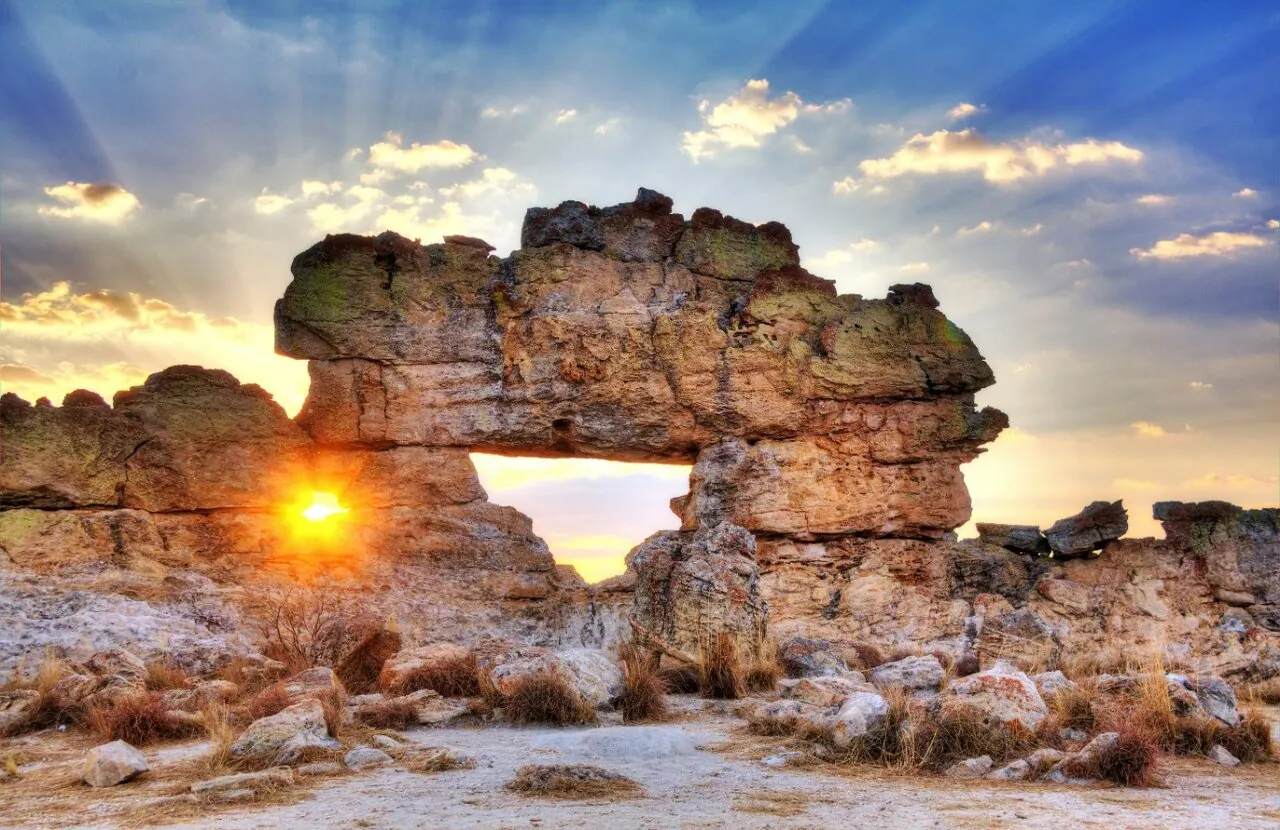
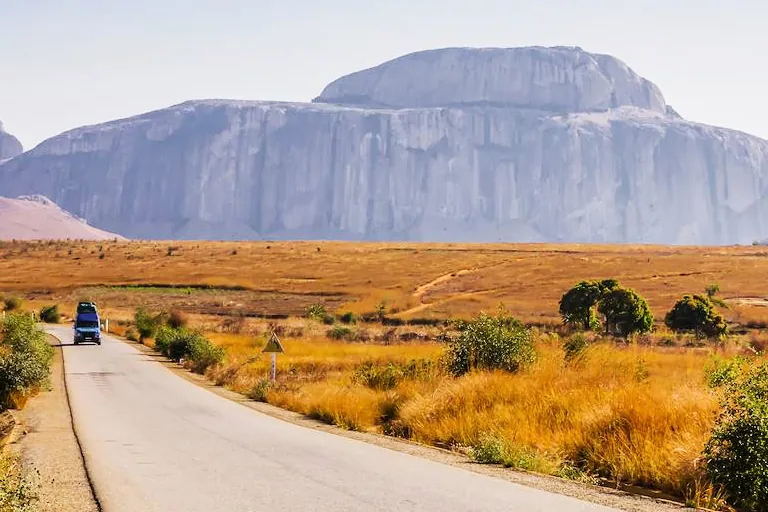
The majority of Madagascar tours depart from Antananarivo, commonly called Tana. You can take the East, West, North or South route according to your choice. The East is lush with rainforests, waterfalls and misty mountains. The West is known for vast plains, winding rivers, dry forests and baobabs. The South features semi-desert landscapes, spiny forests and unique rock formations.
In the brief below, we outline what you can experience on the tour of your choice.
Eastern Tour
The Eastern tour departs from Tana to Andasibe and ends at Sainte-Marie.
Wildlife, biodiversity and Lemurs
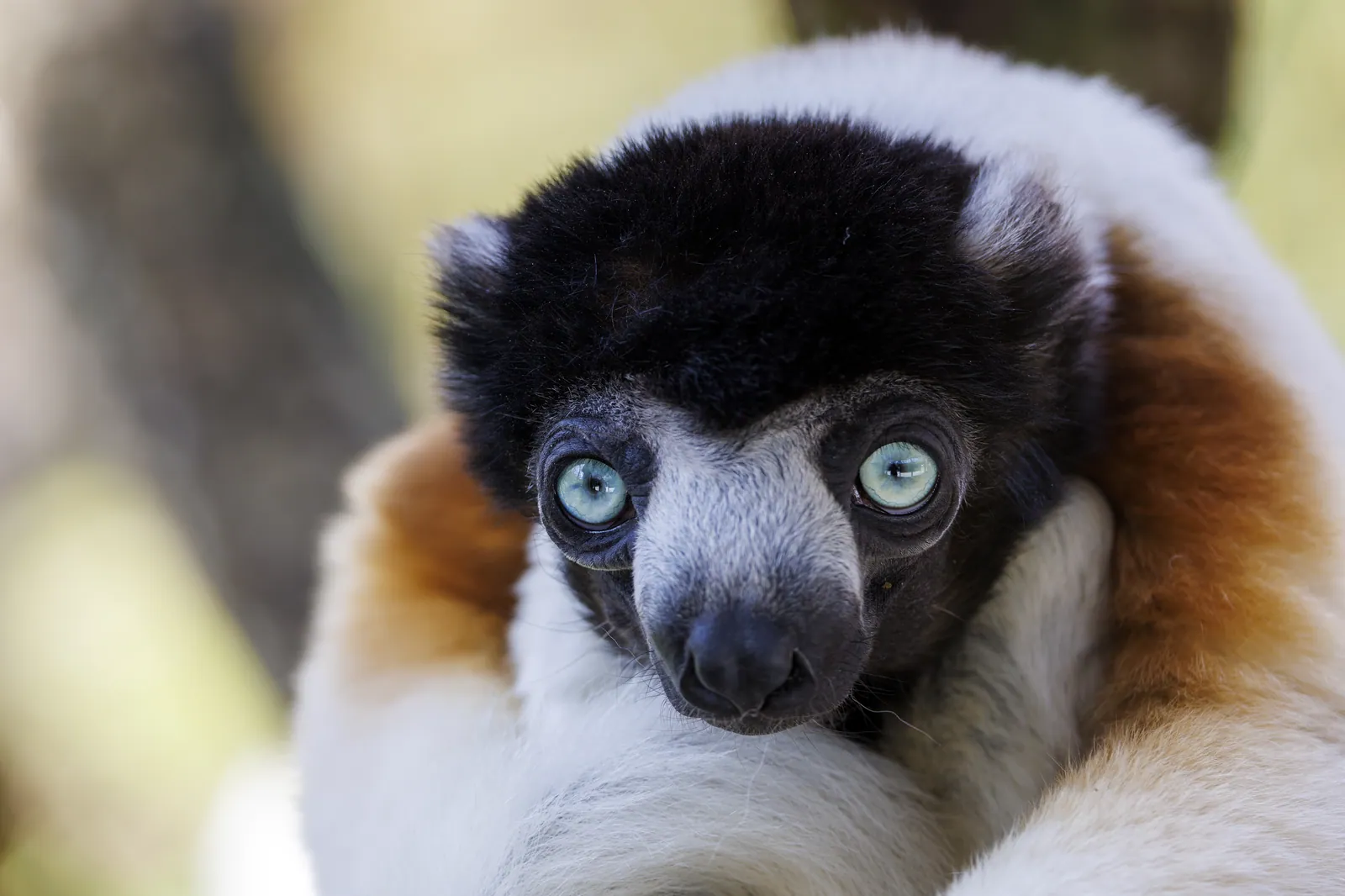
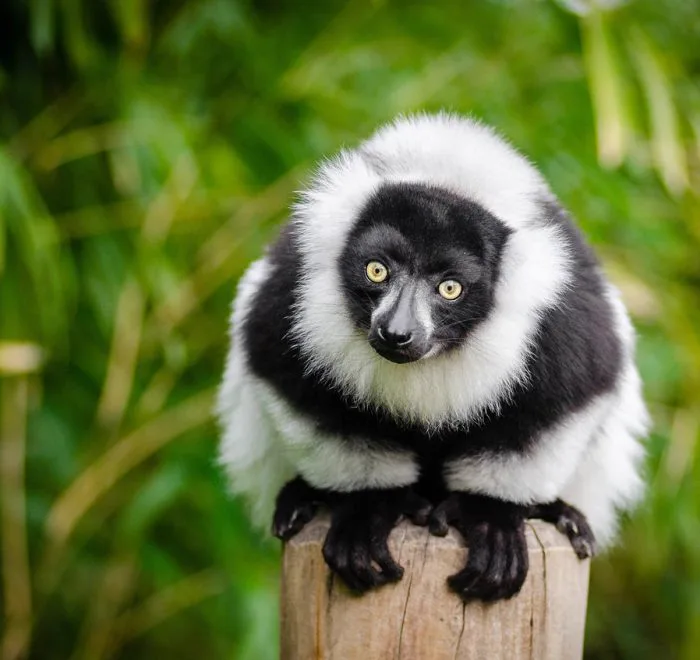
Andasibe is the most visited park in Madagascar and includes Analamazaotra Special Reserve and Mantadia National Park. The latter is a paradise for nature lovers. Its dense primary rainforest is home to endemic species including the black-and-white ruffed lemur, red-bellied lemur and charismatic diademed sifaka. More than 100 bird species live here, many endemic, while ancient tree ferns, orchids, pandanus and medicinal plants line the trails. The eastern rainforest is also home to the indri lemur.
Baobab
You cannot see baobabs on this tour.
Beach
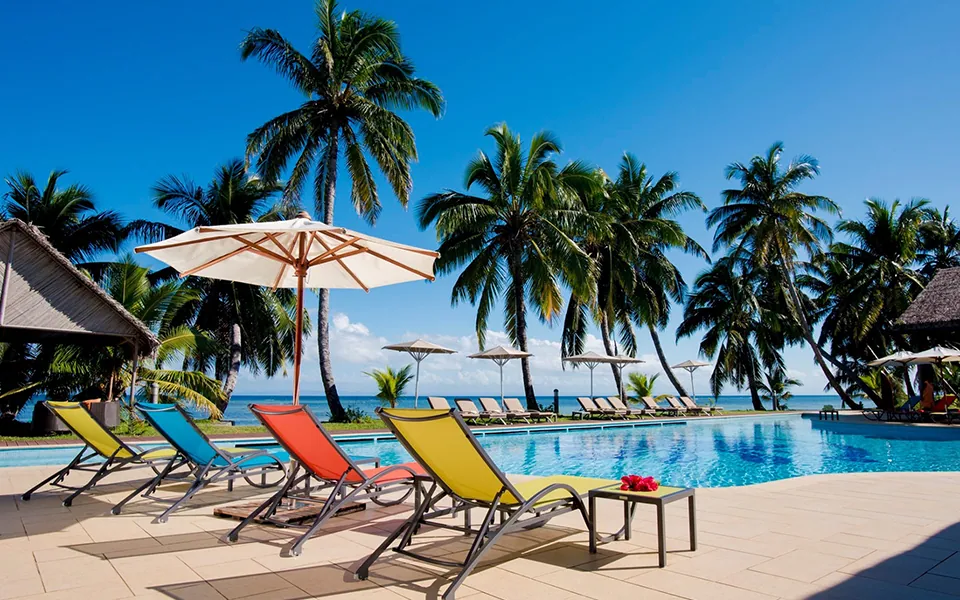
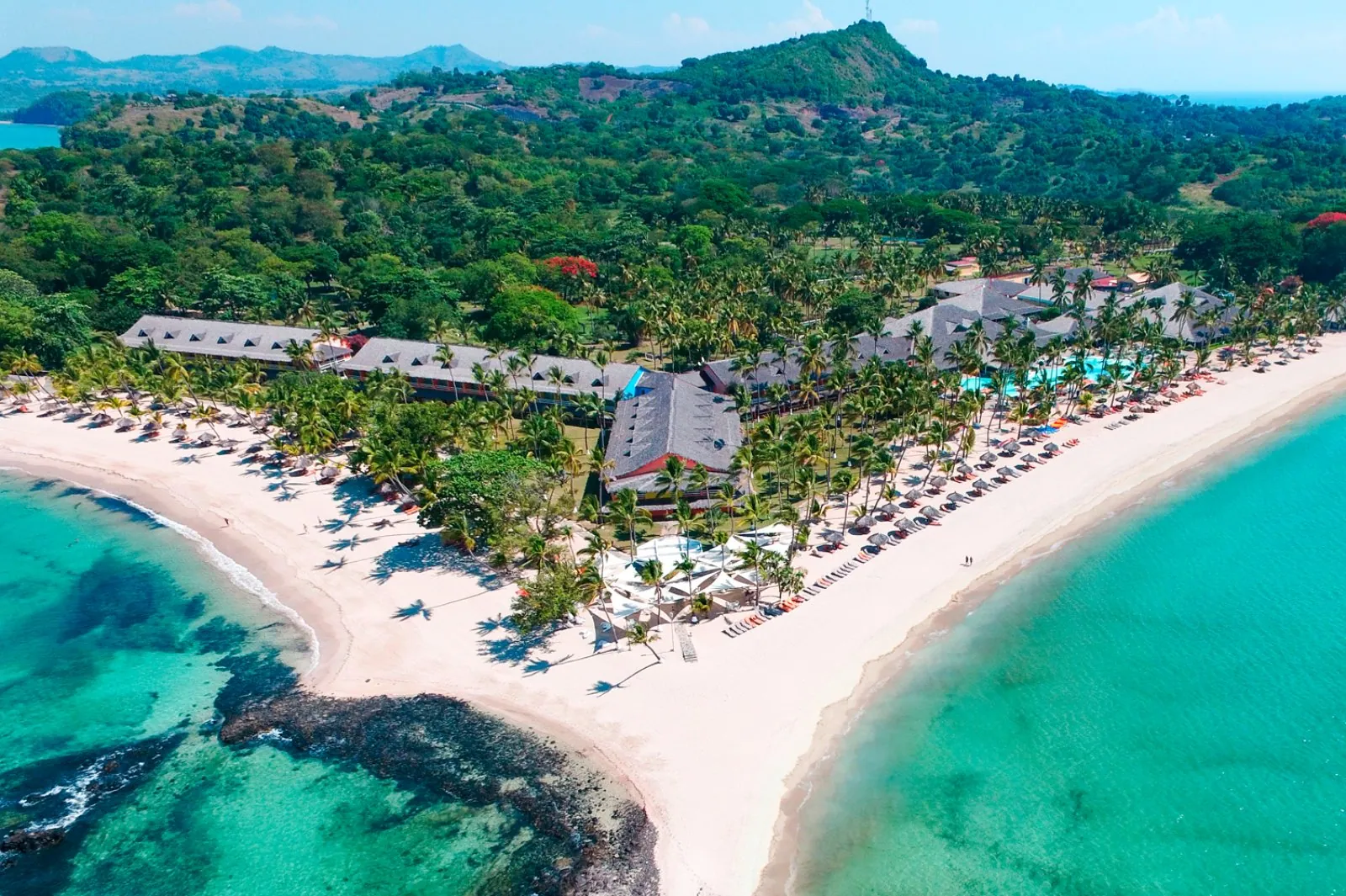
At the end of the tour, we bring you to relax on the beaches of Sainte-Marie.
Île Sainte-Marie (Nosy Boraha) & Madagascar Whales
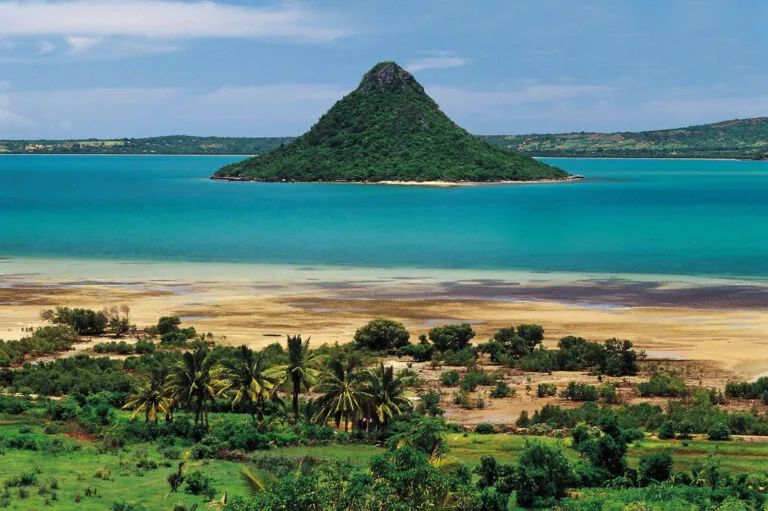
Sainte-Marie combines palm-lined beaches with authentic charm. It is especially known for its whale season from July to September, when humpback whales surface to breathe and communicate.
Western Tour
Biodiversity, Baobabs & Scenery
The tour departs from Antananarivo and ends at Morondava. It combines the famous Tsingy de Bemaraha and the beautiful Avenue of the Baobabs. The Tsingy is a must-see and a UNESCO World Heritage Site.
Tsingy of Bemaraha Park
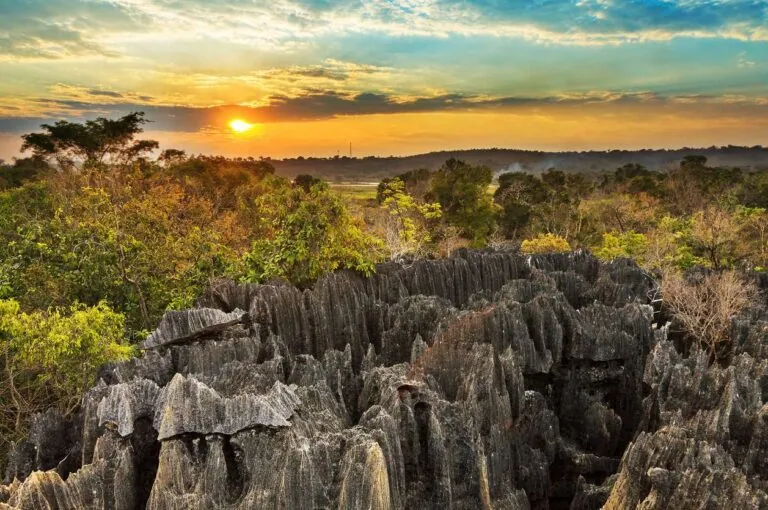
The Tsingy form an immense stone maze, crossed by narrow passages, suspended walkways and aerial viewpoints. Visitors can safely explore panoramic views of the Manambolo River and surrounding plains. The park is rich in lemurs, endemic birds, reptiles and rare plants.
Baobabs Alley
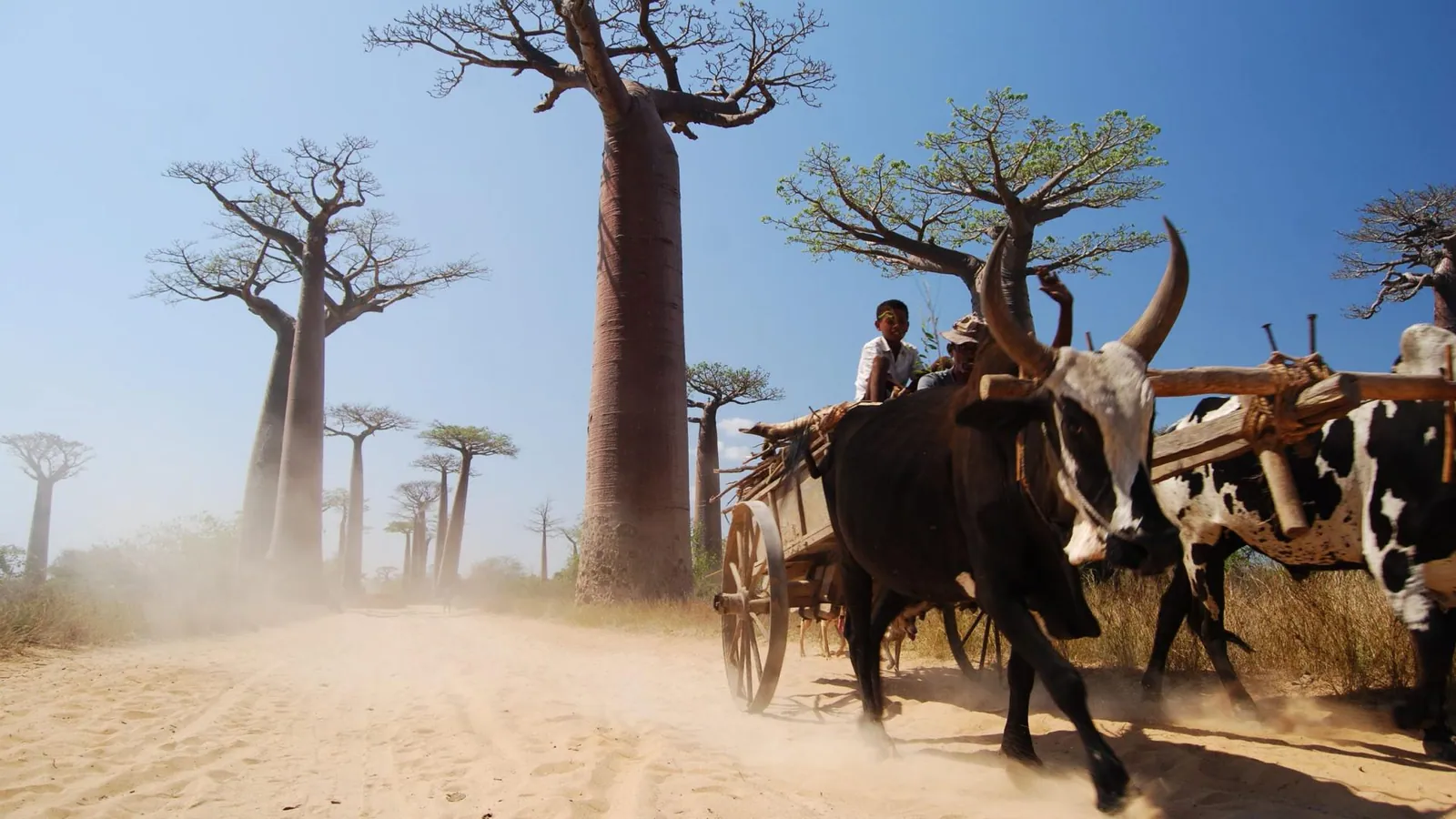
On the way back from the Tsingy, discover the legendary Avenue of the Baobabs. Known as the “Trees of Life”, baobabs can live for over a thousand years, storing water and providing shelter, food and spiritual meaning to local communities. Grandidier’s baobab is the tallest species in the world and forms the famous avenue near Morondava.
Lemurs
Visitors encounter lemurs around the Tsingy and during the river descent.
The Northern Tour
It departs from Antananarivo to Diégo-Suarez and ends at Nosy Be.
Tsingy, Wildlife and Lemurs
This tour leads to the Tsingy of Ankarana. The 18,220-hectare reserve features a razor-sharp limestone massif, vast caves, underground rivers and deep gorges. Its unique ecosystem shelters lemurs, bats, reptiles and endemic birds. Walkways, suspension bridges and viewpoints open panoramic views over the canyons and dry forests.
Red Tsingy
On the way, discover sedimentary formations layered in colors from white to red. Formed by erosion of red sandstone rather than limestone, these structures resemble a natural sandcastle.
Baobab
In Ankarana National Park you can see Adansonia perrieri, the rarest baobab species in the world.
Beach
We bring visitors to relax on the beaches of Nosy Be.
Southern Tour
The Southern tour departs from Tana to Tuléar and explores two major national parks: Ranomafana and Isalo.
Lemurs
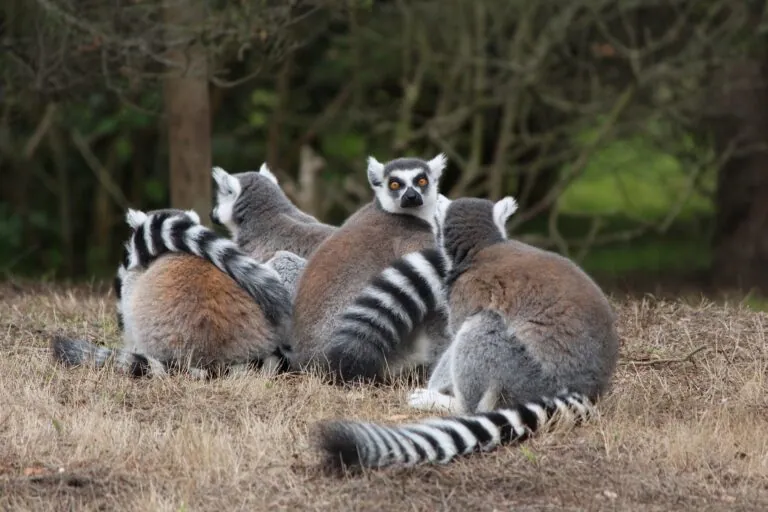
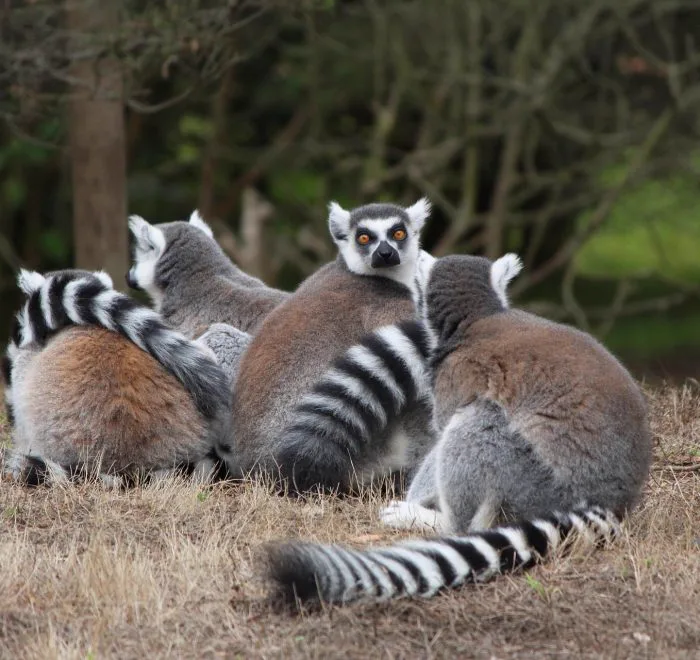
Ranomafana is famous for more than 12 recorded lemur species, including the critically endangered golden bamboo lemur and greater bamboo lemur, Milne-Edwards’s sifaka and the red-bellied lemur. Isalo is home to ring-tailed lemurs, Verreaux’s sifaka and red-fronted brown lemurs.
Biodiversity
The parks are rich in reptiles, chameleons, geckos and skinks. More than 80 bird species have been recorded, alongside colorful butterflies, beetles and endemic invertebrates.
Baobab
Visitors on this tour can see baobabs in Ifaty at the Reniala Reserve.
Beach
At the end of the tour, relax on the beaches of Ifaty or Ambatomilo.
Makay Massif Trek
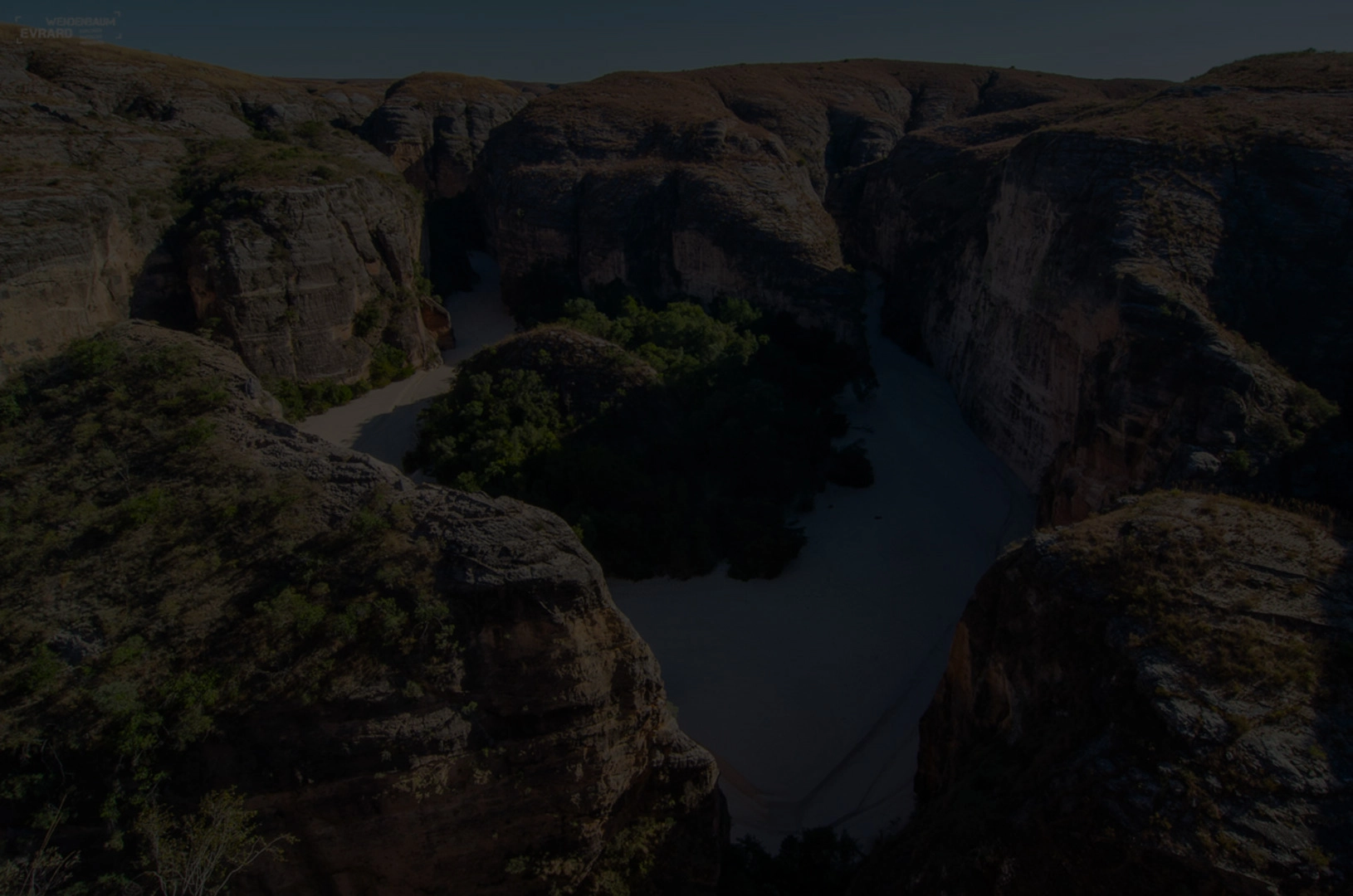
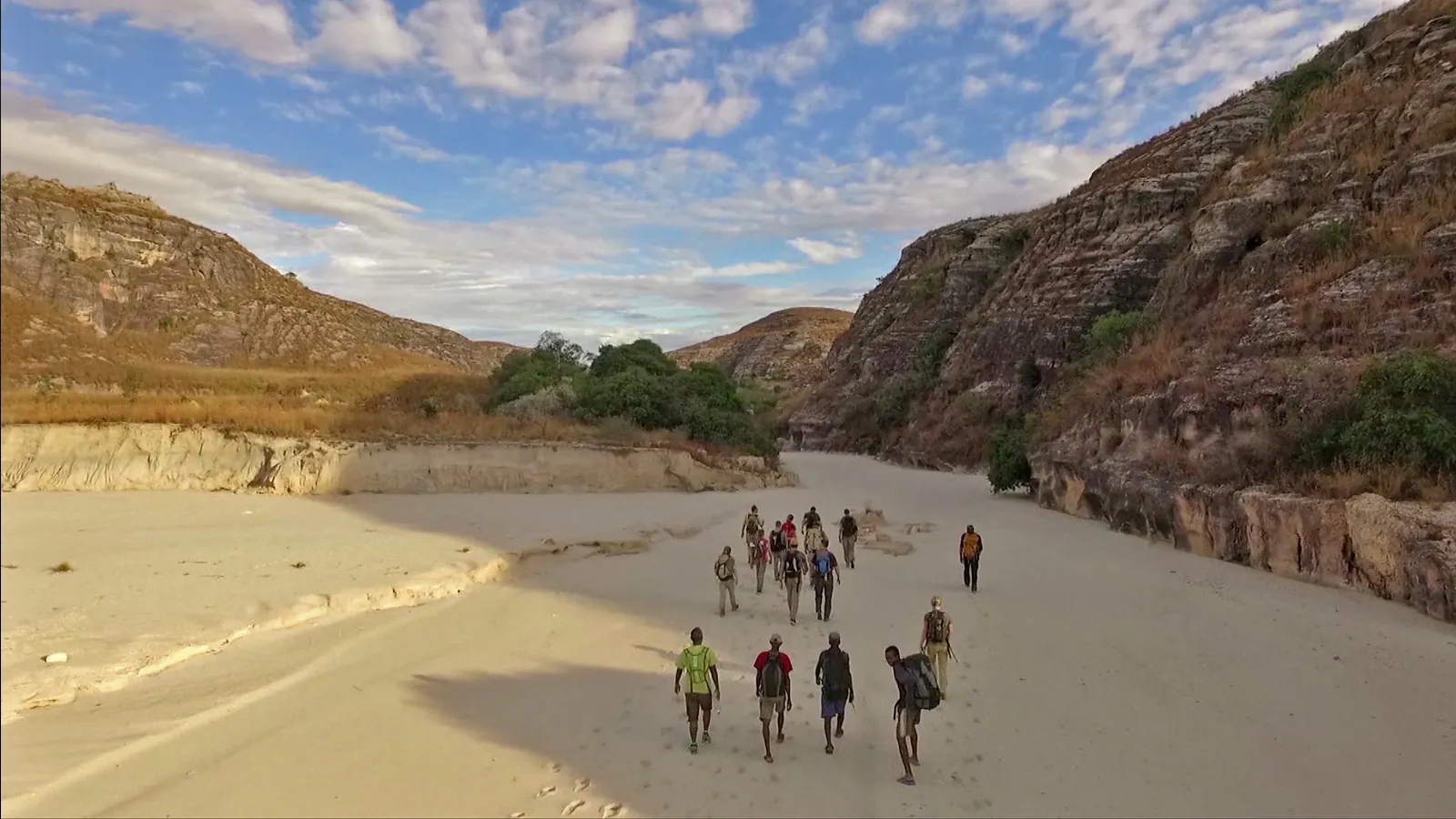
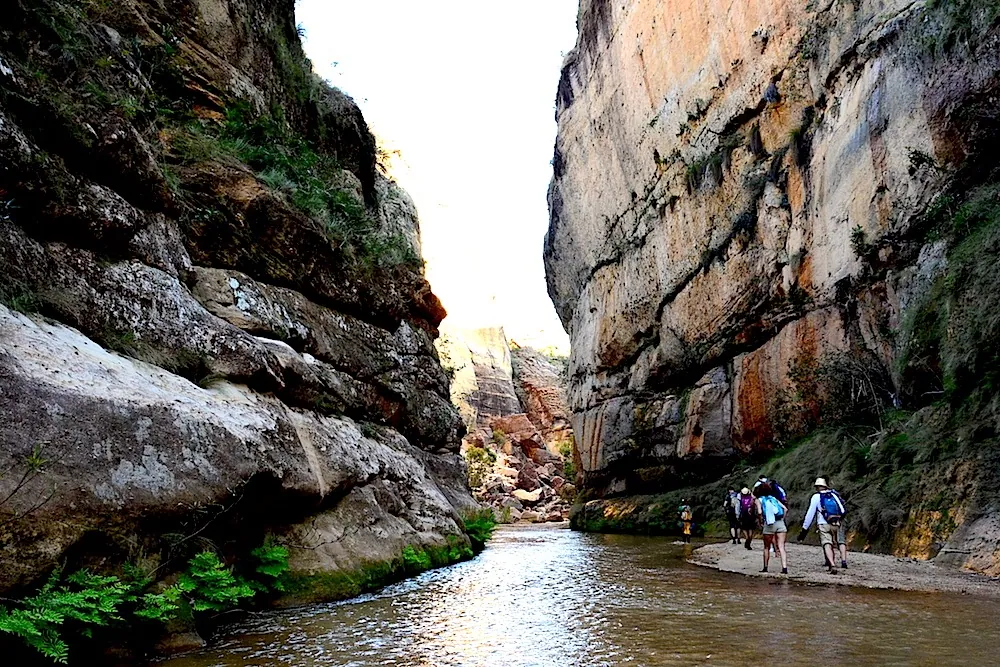
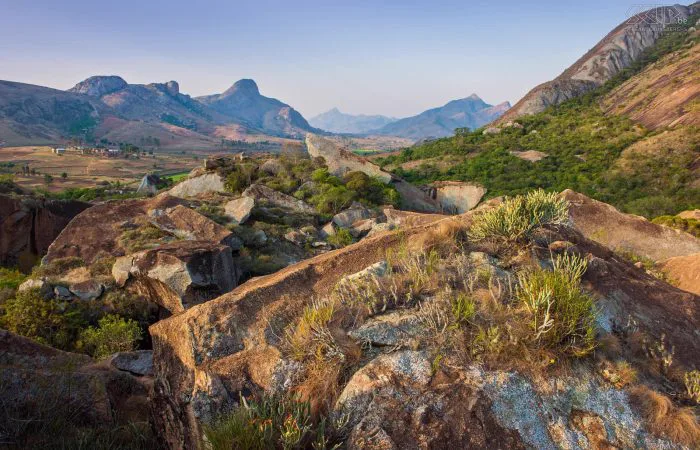
The Makay Massif tour departs from Antananarivo to the South. This still largely unexplored region is often described as Madagascar’s last great wilderness. Accessible only on foot, it consists of sandstone massifs, spectacular gorges, rivers and year-round waterfalls. These isolated ecosystems hold endemic plants, lemurs, reptiles, amphibians and rare birds.
Makay offers a unique expedition far from roads, villages and mass tourism. Several days of trekking are needed to explore it, camping in pristine nature, crossing rivers and walking through narrow canyons. After the trek, we recommend resting on the beaches of Ifaty, Ambatomilo, Sainte-Marie, Nosy Be or Anjajavy.
Group Tours
Our group tours comprise around 18 people, with smaller groups of 8 to 12 also available. The itineraries and facilities remain the same. These tours are called GIR (Groupe d’Individuels Regroupés).
Day 1 — Arrival
Arrival at Antananarivo airport. Meet your guide, welcome briefing and transfer to San Cristobal.
Day 2 — Antananarivo / Andasibe
Drive to Andasibe with a stop at Peyrieras Reserve, then visit Vakona Private Reserve and Lemur Island. Overnight at Vakona Forest Lodge.
Day 3 — Andasibe
Full-day guided visit to Analamazaotra Special Reserve, home to lemurs, endemic birds, tree ferns, orchids and pandanus.
Day 4 — Andasibe / Antsirabe
Road to Antsirabe, an elegant spa town surrounded by rice fields, rolling hills and traditional red-brick houses.
Day 5 — Antsirabe / Miandrivazo
Short Antsirabe city tour, then drive to Miandrivazo on the Tsiribihina River as the landscape changes from green highlands to semi-arid plains.
Day 6 — Miandrivazo / Kirindy
Drive west through baobabs and savannah to Kirindy, renowned for nocturnal wildlife including the fossa.
Day 7 — Kirindy / Bekopaka
Sandy tracks, baobabs and traditional ferry crossings over the Tsiribihina and Manambolo rivers lead to the gateway of Tsingy de Bemaraha.
Day 8 — Tsingy of Bemaraha
Explore the Manambolo Gorge by boat, discover caves and walk through the Petits Tsingy to panoramic viewpoints.
Day 9 — Tsingy of Bemaraha
A full-day visit to the Grand Tsingy, crossing the dramatic limestone forest and its suspended bridges.
Day 10 — Bekopaka / Morondava
Return to Morondava via the Baobabs in Love and stop at the celebrated Avenue of the Baobabs for sunset.
Days 11 & 12 — Morondava
Two free days for leisure by the seaside.
Day 13 — Morondava / Antananarivo
Transfer to the airport and flight back to Antananarivo. Meet and assist on arrival, then transfer to San Cristobal.
Day 14 — Departure
Depending on your flight schedule, enjoy a city tour before transfer and assistance at the airport.